The conversation ranges from Calvin’s Geneva and the French Reformed connection to the Scottish Covenanters, the English civil wars, John Witherspoon, the American founding, the 1788 revision of the Westminster Confession, and contemporary debates over Christian nationalism. Along the way, Hart helps us see how questions of church government, civil authority, establishment, liberty, and public memory are bound up with the church’s confession that Christ alone is head of his church.
Participants: Camden Bucey, Darryl G. Hart
]]>The conversation considers why the doctrine of Scripture and the work of the Spirit must come before any faithful account of biblical masculinity. Adams unfolds five marks of manhood—righteous living, sacrificial love, dependent leadership, courageous zeal, and humble servanthood—using David’s life as both a positive and negative example that ultimately points to Christ. The episode also addresses contemporary challenges in the church, the need for fathers and elders to disciple younger men, and the importance of presence, faithfulness, and generational responsibility in the home and covenant community.
Participants: Camden Bucey, Matthew Adams
]]>Participants: Rob McKenzie, Robert Tarullo
]]>Camden Bucey and Ryan Noha sit down at Reformed Forum headquarters in Libertyville, Illinois, for a special ministry update. They discuss upcoming events, new and forthcoming Reformed Academy courses, publishing projects, international translation efforts, and ways listeners can pray for and partner with Reformed Forum.
This update includes information about the OPC General Assembly, the Rome Scholars and Leaders Network, the PCA General Assembly meetup in Louisville, the Greenville Seminary summer seminar on apologetics and evangelism, the Birmingham seminar on discovering Christ in all of Scripture, the 2026 Reformed Forum Theology Conference, and the Christ the Center 1000th episode celebration in Austin, Texas.
Participants: Camden Bucey, Ryan Noha
]]>This conversation explores why Brown’s work remains timely for pastors, elders, seminarians, and church members today. Rather than treating church government as a secondary or merely practical matter, Brown presents the church as a visible spiritual society established by Christ, governed by his Word, and ordered for the edification of his people.
Participants: Camden Bucey, Matthew Vogan
]]>The conversation challenges the caricature of Calvin as cold or detached, highlighting his attention to the whole person—mind, heart, and will—and his confidence in God’s providence, prayer, Scripture, and the ministry of the local church. Calvin’s letters reveal a model of soul care that remains deeply relevant for pastors, elders, and church members today.
Participants: Camden Bucey, Michael Mock
]]>Participants: Rob McKenzie, Robert Tarullo
]]>What emerges is a deeply encouraging portrait of ordinary, faithful labor. The conversation highlights the need for indigenous theological leadership, German-language Reformed resources, and strong ecclesial communities where believers are not left to grow in isolation. Lucas reflects on discovering Reformed theology and using podcasting and social media to introduce it to German listeners, while Philip describes the theological journey that led his family to move for the sake of a confessional church home. Taken together, these conversations offer a vivid glimpse into the opportunities and difficulties of gospel ministry in Germany today—and a compelling call to pray for theological training, church planting, and lasting Reformed witness.
Participants: Camden Bucey, Jochen Klautke, Lukas Strauß, Philip Paul
]]>The heart of the episode explores the life and ministry of Cornelius W. Grafton, a remarkable Mississippi Presbyterian pastor whose decades of quiet faithfulness, denominational leadership, educational labor, and pastoral endurance left a deep mark on church life in the American South. Camden and David consider why Grafton has been largely overlooked, what his ministry reveals about ordinary pastoral faithfulness, and how his life still instructs ministers and churches today.
Participants: Camden Bucey, David T. Irving
]]>Participants: Rob McKenzie, Robert Tarullo
]]>The church is not a mere institutional add-on to the kingdom. Rather, in its inaugurated form, the church is the kingdom of God as constituted by the Spirit of the ascended Christ. The episode also explores the church’s indestructible life, the meaning of the “gates of hell,” the centrality of the means of grace, and the already/not-yet character of the kingdom’s coming. Along the way, Camden and Lane also mark the end of this long-running series on Biblical Theology and preview the next phase of Vos Group on The Teaching of Jesus concerning the Kingdom of God and the Church.
Participants: Camden Bucey, Lane Tipton
]]>The heart of the episode focuses on Banner of Truth’s newly expanded edition of Walker’s classic work. MacLean explains why the book has served for decades as an indispensable guide to the Scottish theological tradition, opening up figures beyond the better-known names and tracing major themes in church history, ecclesiology, providence, the atonement, and church-state relations. Together, we reflect on the historical setting of Scottish theology, the value of Walker’s new footnotes and translations, and the abiding importance of visible church unity and Christ’s headship over his church.
Participants: Camden Bucey, Donald John MacLean
]]>Together, they reflect on the value of places like Twin Lakes Fellowship, the dangers of pastoral isolation, and the way meaningful friendships can provide encouragement, accountability, and spiritual strength. They also make the case that deep theology is not a luxury for academics or large churches, but a necessity for faithful ministry in every context. This episode is a reminder that pastors are not meant to serve alone, and that rich doctrine and honest friendship are two of God’s ordinary means for sustaining those called to shepherd his people.
Check out the Larger for Life podcast.
Participants: Camden Bucey, Derrick Brite, Sean Morris
]]>Participants: Rob McKenzie, Robert Tarullo
]]>Lee Hutchings serves as senior pastor of Trinity PCA in North Canton, Ohio, a congregation he planted after years of ministry in Mississippi. Ben Kappers serves All Saints Reformed Church in St. George, Utah, as an evangelist under the oversight of Northern California Presbytery, bringing experience from both the Reformed Church in America and the Presbyterian Church in America.
Together they offer pastoral wisdom on planting confessionally Reformed churches through the clear proclamation of Christ, the faithful teaching of Scripture, prayer, and the ordinary ministry of the church. This conversation encourages pastors, elders, and church members alike to labor patiently and confidently, knowing that the Lord is pleased to gather and strengthen his people through his appointed means.
Participants: Ben Kappers, Camden Bucey, Lee Hutchings
]]>Participants: Rob McKenzie, Robert Tarullo
]]>Lane explains why Vos sees this moment as a decisive redemptive-historical transition: The kingdom of God, proclaimed and embodied in Christ, begins to assume its ecclesial form. Together, Camden and Lane discuss the church as the kingdom in its present historical expression, the role of the Spirit poured out from the ascended Christ, and the distinction between the kingdom’s inaugurated and consummated forms.
They also consider how Vos’s teaching helps clarify ongoing theological questions concerning the kingdom of grace and glory, the already-and-not-yet structure of redemptive history, the thought of Meredith Kline, and the strengths and weaknesses of more recent reductionist or two-kingdom approaches.
Participants: Camden Bucey, Lane G. Tipton
]]>In this live episode of Christ the Center, Camden Bucey is joined by Jonathan Master and Matt Holst at Shiloh Orthodox Presbyterian Church in Raleigh, North Carolina, to discuss John L. Girardeau’s rich and pastoral treatment of adoption. The conversation explores why adoption should not be collapsed into justification or regeneration, how it addresses our alienation from God, and why it matters so deeply for prayer, suffering, assurance, and the Christian life.
Along the way, the panel reflects on Girardeau’s life and ministry, Adam’s original sonship, Christ’s filial obedience, the believer’s inheritance in Christ, and the comfort of knowing God not only as Judge, but as Father.
This is a warm and theologically substantial discussion on one of the most beautiful and neglected doctrines in Scripture.
Participants: Camden Bucey, Jonathan Master, Matt Holst
]]>Participants: Andrew Miller, Mark A. Winder
]]>The discussion begins with Matt Adams’s article “Grassroots Presbyterianism ≠ Congregationalism” and expands into a broader exploration of Presbyterian ecclesiology. Along the way, the panel considers plurality and parity of elders, the role of presbyteries and general assemblies, the importance of connectionalism, and the ways accountability serves the peace, purity, and unity of the church.
They also reflect on differences in ecclesial culture among the PCA, OPC, and URCNA, discuss overtures and church courts, and offer practical encouragement for ordinary church members who want to be active, faithful Presbyterians in their local congregations.
Matthew Adams serves as Senior Pastor of First Presbyterian Church in Dillon, South Carolina. In addition to his pastoral ministry, Adams serves as a council member for the Gospel Reformation Network and co-hosts the podcast Larger for Life.
Ben Ratliff serves as Associate Pastor of Covenant Presbyterian Church in Cleveland, Mississippi. Ratliff is also a co-host of the podcast Polity Matters, where he helps lead conversations on Presbyterian polity and church government.
Participants: Ben Ratliff, Camden Bucey, Matt Adams
]]>Drs. Bucey and Master explore Vos’s foundational distinction between biblical theology and systematic theology—and why both are indispensable for faithful exegesis and preaching. Biblical theology, which Vos himself preferred to call “the history of special revelation,” reads Scripture as the organic, progressive unfolding of God’s redemptive acts in history—from the protoevangelium in Genesis 3:15 to the consummation of all things in Christ. That redemptive-historical framework opens up notoriously difficult passages (Hebrews 6, the unforgivable sin) in ways systematics alone cannot. The conversation also covers Vos’s two-age eschatology, his key works (Biblical Theology, The Pauline Eschatology, Grace and Glory, The Teaching of Jesus Concerning the Kingdom of God and the Church), and the question of why Vos remained at Princeton when Machen and others departed.
Be sure to subscribe to the Dead Presbyterians Society podcast from Greenville Presbyterian Theological Seminary.
Participants: Camden Bucey, Jonathan Master
]]>At the heart of the conversation lies a powerful biblical framework: we are in Christ while also being conformed to his image. Romans 8:29 declares that God predestined His people to be conformed to the image of His Son—a settled identity and a lifelong trajectory of growth. Poythress unpacks how 2 Corinthians 3:18 reframes the secular obsession with “manifesting” into the biblical practice of beholding Christ, the true mechanism of transformation. The episode also explores the church as a “thick community” designed for the kind of multi-dimensional, embodied relationships that curated online personas can never provide. For pastors, elders, and anyone seeking maturity in Christ, the takeaway is both liberating and compelling: the Christian life is a matter of becoming what you already are in Christ.
Participants: Camden Bucey, Justin N. Poythress
]]>Many of us learned the Reformation through familiar lanes: Germany, Switzerland, the Netherlands, England, and Scotland. Central Europe shares the same theological currents, but the story often turns on different hinges: dynasties and estates, borderlands and war, and overlapping jurisdictions. If you’ve ever wondered why the map gets complicated the moment you head southeast from Wittenberg, this is for you.
One way to summarize the region is that politics and confession were inseparable—not because theology didn’t matter, but because the structures that protected (or suppressed) reform were often political bodies: rulers, city councils, and noble estates.
Astrid von Schlachta describes the Austrian dynamic in a sentence that could serve as a thesis for much of Central Europe:
“The Reformation created fundamental political conflicts and competition between Catholic sovereigns trying to centralize and consolidate power and the noble Estates and other local authorities aiming to broaden their autonomy at the expense of Habsburg sovereignty.” (Astrid von Schlachta, “The Austrian Lands,” p. 70)
This helps to make sense of where reform advances quickly, where it stalls, and why Catholic renewal later proved so effective in some places.

If you only remember one date for the region, make it 1526 and the Battle of Mohács. After the battle, Hungary’s political situation fractured—and with it the pathways by which Protestant ideas took root.
“Following the Battle of Mohács in 1526, the territory of the Holy Crown of Hungary was divided. The subsequent development of Protestantism took four paths in the territories of Habsburg Hungary, Transylvania, Ottoman-occupied Hungary, and in Croatia.” (Márta Fata, “The Kingdom of Hungary and Principality of Transylvania”, p. 92)
That “four paths” line is clarifying. It means the Reformation’s spread in Hungary can’t be told as a single national settlement the way we might tell the English or Scottish story. Instead, reform moved through a patchwork of territories—some under Habsburg rule, some under Ottoman occupation, and some within the distinctive political arrangement of Transylvania.
In broad strokes, Central Europe had many of the same confessional strains as other regions:
Yet Von Schlachta provides a compact snapshot of the particular Austrian blend: “Although, the influence of the Lutheran Reformation was predominant, Austria also felt the impact of other Protestant movements including Anabaptism.” (p. 70) In other words: if your mental map is “Luther → Germany → Lutheran,” this region will stretch it. It’s more accurate to picture a busy crossroads of preaching, print, migration, and patronage.
Transylvania is especially important for understanding why Central Europe doesn’t fit the stereotype of “one ruler, one confession.” The political setting mattered. Fata notes, “Transylvania . . . evolved into a vassal state of the Ottoman Empire.” (p. 93) That doesn’t mean “Ottoman rule = forced conversion.” It does mean the levers of power and enforcement looked different than in many Western settings. The result was a confessional landscape that could be diverse, contested, and (at points) legally managed rather than uniformly imposed.
Here is a basic timeline:
Central Europe helps us remember that the Reformation was not only a doctrinal controversy; it was a long process of church formation under pressure—sometimes pressure from kings, sometimes from estates, sometimes from war and shifting borders.
The history of Central and Eastern Europe invites patient listening—to the witness of the past and to the life of Reformed churches in the region today—and it can sharpen the way Christians tell the Reformation story as a whole, not as a narrow Western narrative but as one providential work of God in and for his church.
If you have recommended reading on the Hungarian or Transylvanian Reformation, send it our way—we’d love to build a stronger list.
]]>Dr. Letham explains why it matters that the acting subject in the Gospels is the eternal Son, who assumes a true human nature without change in his divine person. From there, they engage contemporary confusions—especially biblicism that isolates Scripture from the church’s confession—and they address the claim that Christ was “adopted” at the resurrection, showing how such proposals unravel both orthodox Christology and the gracious character of adoption for believers.
Participants: Camden Bucey, Lane G. Tipton, Robert Letham
]]>Participants: Rob McKenzie, Robert Tarullo
]]>Letters from America opens a window into a critical moment in Reformed history—when orthodox and confessional Presbyterianism in America was under siege from both modernism and the rising influence of Barthianism, which Van Til labeled “the new modernism.” Ragusa introduces these letters by situating them within the broader relationship between the Dutch Reformed in the Netherlands and the orthodox Presbyterians in America—a relationship that reaches back to the seventeenth century.
Van Til’s wartime-like correspondences—written in the heat of theological conflict—offer a firsthand account of the spiritual and ecclesiastical upheavals of the era. Through Van Til’s eyes, fixed steadfastly on his risen and reigning Lord, readers witness pivotal moments in American Presbyterian history, among them J. Gresham Machen’s trial, deposition, and sudden death; the founding of Westminster Theological Seminary and the evangelistic work of its graduates; and the formation of the Presbyterian Church of America and its subsequent renaming as the Orthodox Presbyterian Church.
These letters bring to life a pivotal chapter in the defense and development of the Reformed faith that helps us to make sense of our present ecclesiastical and theological landscape.
Participants: Camden Bucey, Dan Ragusa
]]>Vos then situates repentance within Jesus’ proclamation of the kingdom: Repentance corresponds to the kingdom’s righteousness-aspect, just as faith corresponds to its power-aspect. Repentance is not a meritorious condition for entry, but the moral-spiritual “fitness” that belongs to life under God’s righteous reign. The episode explores Vos’s “vernacular of repentance” in the Gospels—regret, inner reversal, and outward turning—showing that biblical repentance is comprehensive, God-centered, and transformative. Far from mere remorse or isolated moral adjustment, repentance is a whole-life reorientation toward God, forming a people whose inner and outer life increasingly reflects the righteousness of the kingdom.
Participants: Camden Bucey, Lane G. Tipton
]]>Here lies the Winter hated,
Goliath-like prostrated,
Whom David’s stone laid low.
Recovered from earth’s chillness,
Spring uses the first stillness
To put left-over illness
Beneath the thin-grown snow.His efforts at retrieving
Lost ground were past believing;
How hard the giant died!
He drew on hidden power,
Stored from his manhood’s dower,
Fighting till the last hour;
It was a glorious fight!In somber indoor musing
Methought I might be using
His stay to close mine own;
Take leave of life’s embraces,
All its delights and graces,
To seek the nameless places,
Where North nor South is known.Misfortune had been taking
My precious things and making
Them break like brittle glass.
I felt upon me creeping
Forebodings of death’s reaping,
Of that blind dreamless sleeping,
That no possession has.O Spring, thou wondrous daring,
To cause without preparing
Me strangest things befall!
Like one who, just returning
From burial rites or burning,
Finds friends busy adorning
For him the banquet hall.Where ever was recorded
Such sudden change afforded
By turn in fortune’s wheels?
Long ice-clogged streams set flowing,
Warm fragrant Southwinds blowing,
Through willows green mists showing,
The old, old, strange appeal!Stream in light-world revealers,
Life-wakers and life-healers,
When flesh from soul would slip!
The feast but just commences;
This needs more than five senses,
The host so much dispenses
For eye and ear and lip.And be it the last station
Of joy, on whose elation
Follows the endless rest,
Though Autumn weep discouraged,
Seeing withered all that flourished,
Yet shall new years be nourished
From the eternal breast.
Vos’s poem “Winter’s Death” brings the story of the seasons to a truly satisfying resolution. The story left off with autumn bravely embracing winter’s silencing sickle, yet not without hope. The life born in the miracle of spring, having reached its full intensity in summer, must now prove its hidden, otherworldly strength against this Goliath-like foe. As in the biblical story, this final poem becomes a poem of eucatastrophe—a sudden and unexpected turn (catastrophe) toward the good (eu).[2]
What expectations accompany the title “Winter’s Death” (Mors Hyemis)? The preceding poem concluded with winter terrible and triumphant. Having wielded his “great sickle,” he reigned over “the bare-shorn land.” It is natural, then, to assume that “Winter’s Death” will dwell on the deadly power that winter itself wields. Indeed, this reality pressed heavily upon the poet himself as he recounts in stanzas 3–4.[3]
Yet the title bears a deeper, more surprising meaning—one we greet with a smile at the poem’s opening:
Here lies the Winter hated,
Goliath-like prostrated,
Whom David’s stone laid low.
The original Dutch is even more direct:
De winter is gestorven (The winter has died)
Als Goliath verdorven (Like Goliath, ruined)
Die ’t lei voor David af (Who yielded before David).4
The poem, then, is not ultimately about winter’s deadly sting, but about the death of winter itself—the death of death. This is good news! Winter shares not only in Goliath’s apparent invincibility, but also in his shocking fall before apparent weakness. For, like David, the life born in spring possesses a hidden strength drawn from beyond itself—a life winter could not finally defeat.
This hidden strength had already been sensed in “Miracle of Spring,” the first of the seasonal poems:[5]
O Soul, so sharply sensing, Eternal Spring so near.[6]
What was intimated in spring is now more fully unveiled with winter’s death:
Though Autumn weep discouraged,
Seeing withered all that flourished,
Yet shall new years be nourished
From the eternal breast.
The original Dutch reads
Schoon zang en bloei vervlogen (Though song and bloom fade),
Herfst beeft, den dood voor oogen (Autumn shivers, death before her eyes),
Het jaar heft toch gezogen (Nevertheless, the year rises, having drawn [nourishment])
De borst der eeuwigheid (From the bosom of eternity).
We will return to these lines shortly. But first, a brief overview of Vos’s poem.
The poem unfolds in eight stanzas, advancing in couplets, with each pair moving the narrative forward. Each stanza is comprised of seven lines—the first three lines form one sentence and the final four form a second. This holds for all but the final stanza, which is one long sentence. The final line of each sentence rhymes: AABCCCB. The number eight may reflect the biblical idea of new creation and the number seven of perfection.
The opening two stanzas proclaim the wonderful eucatastrophe of spring. Like David, spring in her youthfulness defeats the rippling giant winter in an utterly unexpected way. The shepherd boy prevailed over the giant with no sword in his hand (1 Sam. 17:50). So, spring does not meet winter’s sickle with her own but “uses the first stillness / to put left-over illness / beneath the thin-grown snow” (stanza 1).
The next two stanzas flash back to winter’s cold, loveless reign, when he mercilessly worked death around and within the poet, stripping him of all that he held dear. He was falling headlong into “nameless places” (stanza 3) of “blind dreamless sleeping” (stanza 4).
But then comes the sudden turn toward the good—the eucatastrophe! In the following two stanzas, the poet, standing on the brink of despair, is pulled back in an instant.
O Spring, thou wondrous daring,
To cause without preparing
Me strangest things befall! (stanza 5, emphasis mine)
He is suddenly, miraculously rich like a bridegroom: alive and overflowing with every desire, excitement, and delight. He experiences a kind of new birth as the scent of lilac and the songs of the birds again fill the soft air. Life has returned, as it were, from the grave—and it has returned full of joy! The once-cold world is now warmed by an abundance of pleasures freely and so richly given.
In the final two stanzas, the poet longs to take in all the pleasures of life. Yet he knows that even his five senses are far too inadequate to receive the fullness of life before him on a platter. Moreover, the eucatastrophe of the new birth has transformed his perspective: The song and bloom that once seemed fleeting with winter’s inevitable arrival were not enjoyed in vain. The song was a rehearsal for eternity, and the bloom a token of the greater beauty that awaited him. They belonged not merely to a passing moment, but to the rich and full eternity from which the year itself draws its life. “For I consider that the sufferings of this present time are not worth comparing with the glory that is to be revealed to us” (Rom. 8:18).
The poem’s conclusion reveals how the seasons point beyond themselves, bringing us to Vos’s deepest insight in his seasonal poetry of true religion and eschatology. Time must not to be confused with eternity, nor eternity with time. Rather, time rests upon eternity and derives its meaning from it—on this, our hope is found. Time, as it unfolds according to the comprehensive plan of God, reflects—creaturely and analogically—the glory of the eternal, self-contained triune God. For Vos, there is a Creator-creature distinction and a Creator-creature relation, in which the creature exists to mirror the Creator’s glory, and the seasons are no exception.
Why, then, might God have ordered the year so that the harshest season is displaced by the most delicate? Why does spring exercise a seemingly hidden power to defy the mighty winter? Why does winter’s death creep slowly across the land, while spring’s new life bursts forth almost overnight? The reason is because God designed the seasons to declare the creation’s hope and ours: the eschatological hope of the resurrection of the dead (Rom. 8:19–23) and of “the new world” to come (Matt. 19:28). The transition from the present world to the new world, from this age to the age to come, will be like the arrival of spring—a sudden turn toward the good when Christ comes again. And like spring, it will point unmistakably beyond itself to the power of the living God who raises the dead.
Vos’s eschatology is eucatastrophically calibrated, in tune with Scripture, first of all, but also with spring. Death did not die gradually. Christ did not rise by degrees. His deepest humiliation turned in an instant when he took his first glorified breath. In that moment, death died and the “Eternal Spring” of the new creation dawned.
We who share in Christ’s death and resurrection, therefore, must walk by faith and not by sight. For in weakness, we are strong. In dying, we live. And we await the eucatastrophe of the resurrection of the dead when our risen and ascended Lord returns. Until then, “we have this treasure in jars of clay, to show that the surpassing power belongs to God and not to us. We are afflicted in every way, but not crushed; perplexed, but not driven to despair; persecuted, but not forsaken; struck down, but not destroyed; always carrying in the body the death of Jesus, so that the life of Jesus may also be manifested in our bodies” (2 Cor. 4:7–10).
Finally, think of what Vos says in his sermon “Rabboni!” based on John 20:16. He draws us into the eucatastrophe at our Lord’s tomb in the garden: Our text takes us to the tomb of the risen Lord, on the first Sabbath-morning of the New Covenant. It is impossible for us to imagine a spot more radiant with light and joy than was this immediately after the resurrection. Even when thinking ourselves back into the preceding moments, while as yet to the external eye there was nothing but the darkness of death, our anticipation of what we know to be about to happen floods the scene with a twilight of supernatural splendor. The sepulchre itself has become to us prophetic of victory; we seem to hear in the expectant air the wingbeat of the descending angels, come to roll away the stone and announce to us: “The Lord is risen indeed!” Besides this, we have learned to read the story of our Lord’s life and death so as to consider the resurrection its only possible outcome, and this has to some extent dulled our sense for the startling character of what took place. We interpret the resurrection in terms of the atoning cross, and easily forget how little the disciples were as yet prepared for doing the same. And so it requires an effort on our part to understand sympathetically the state of mind they brought to the morning of this day. . . . The circumstance shows that there is need of a deeper faith than that of mere acquaintance with and consent to external statements of truth, when the dread realities of life and death assail us. Dare we say that we ourselves should have proved stronger in such a trial, if over against all that mocked our hope we had been able to place no more than a dimly remembered promise? Let us thank God that, when we ourselves enter into the valley of the shadow of death, we have infinitely more than a promise to stay our hearts upon, that ours is the fulfilment of the promise, the fact of the resurrection, nay the risen Lord Himself present with rod and staff beside us.
The resurrection of Christ is the true eucatastrophe at the heart of God’s wonderful story of creation, fall, redemption, and consummation. As we await the consummation, dread realities may inflict us, as they did for Vos (stanzas 3–4), but we have not only the promise but, more importantly, living fellowship with the good shepherd. He is with us always. And he will certainly lead us into the pastures of the “Eternal Spring” that he has opened for us.
So, in Christ by faith we already revel in winter’s death.
[1] This translation was self-published by Geerhardus Vos in Charis: English Verse (Geerhardus Vos, 1931), 18–20. The original Dutch version was published in Spiegel der Natuur en Lyrica Anglica (Geerhardus Vos, 1912), 64–65.
[2] This term was coined by J. R. R. Tolkien in his essay “On Fairy-stories.” He writes, “The consolation of fairy-stories, the joy of the happy ending: or more correctly of the good catastrophe, the sudden joyous ‘turn’ (for there is no true end to any fairy-tale): this joy . . . is not essentially ‘escapist’, nor ‘fugitive’. . . . [I]t is a sudden and miraculous grace. . . . It does not deny the existence of dyscatastrophe, of sorrow and failure: the possibility of these is necessary to the joy of deliverance; it denies (in the face of much evidence, if you will) universal final defeat and in so far is evangelium, giving a fleeting glimpse of Joy, Joy beyond the walls of the world, poignant as grief.” Tolkien, “On Fairy-stories” in Tolkien on Fairy-stories, eds. Verlyn Flieger and Douglas A. Anderson (Harper Collins, 2014), 75.
[3] Geerhardus Vos, “Autumn,” trans. Daniel Ragusa: https://reformedforum.org/geerhardus-voss-autumn-a-translation-and-commentary/.
[4] My translation in parentheses.
[5] Geerhardus Vos, “Miracle of Spring,” trans. Daniel Ragusa: https://reformedforum.org/geerhardus-voss-miracle-of-spring-a-translation-and-commentary/
[6] My translation in parentheses.
[7] Geerhardus Vos, Grace and Glory: Sermons Preached in the Chapel of Princeton Theological Seminary (The Reformed Press, 1922), 89–90.
]]>The conversation also highlights a timely pastoral burden: weak views of Scripture often leave believers vulnerable—whether to “me-and-my-Bible” isolation (confusing sola with solo), or to the perceived stability of traditions that promise rootedness without delivering true unity. By reconnecting the doctrine of Scripture to the doctrine of God, the episode invites listeners to hear again the shepherd’s voice in God’s word and to respond with reverent, regulated, Christ-centered worship.
Participants: Mark A. Winder, Robert Arendale
]]>Participants: Rob McKenzie, Robert Tarullo
]]>Presley highlights Irenaeus’s vision of Scripture as a unified, Christ-centered story, summed up in his doctrine of recapitulation: All things find their meaning, coherence, and redemption in Christ, the true head of humanity. Against both ancient Gnosticism and modern disembodied spiritualities, Irenaeus affirms the goodness of creation, the integrity of the human person, and the necessity of catechesis rooted in the rule of faith. For today’s church—navigating doctrinal confusion, cultural fragmentation, and questions of discipleship—Irenaeus offers a compelling model of theological method that is biblical, confessional, pastoral, and profoundly Christ-centered.
Dr. Stephen O. Presley is Director of Education and Engagement and Senior Fellow for Religion and Public Life at the Center for Religion, Culture and Democracy and Associate Professor of Church History at Southern Seminary. He is the author of Irenaeus of Lyons: His Impact and Life (Christian Focus) and Cultural Sanctification: Engaging the World like the Early Church (Eerdmans).
Participants: Camden Bucey, Stephen Presley
]]>Participants: Rob McKenzie, Robert Tarullo
]]>This conversation presses the listener to consider how these same distortions reappear across church history and into the present—whether in moralistic fundamentalism, liberal Protestant ethics, or debates surrounding the New Perspective on Paul. The antidote Vos commends is not tighter rules or refined casuistry, but a recovery of true religion: life coram Deo, grounded in union with Christ, animated by delight in God himself as our supreme reward. In Christ, obedience is restored to its proper place as worship, flowing from grace rather than self-reliance.
Participants: Camden Bucey, Lane G. Tipton
]]>Participants: Jim Cassidy, Mark A. Winder
]]>The conversation also explores the modern relevance of Whitaker’s work—especially amid contemporary debates over authority, tradition, and ecumenism. Leinbach reflects on how advances in historical and textual scholarship have confirmed many of the Reformers’ arguments, while Rome’s own positions have shifted over time. Whitaker’s insistence on the perspicuity of Scripture, the singular infallibility of God’s Word, and the Spirit’s inward testimony offers not only apologetic clarity but deep pastoral comfort. This episode invites listeners to recover confidence in Scripture as God’s clear and sufficient means of revealing Christ to his people.
Participants: Camden Bucey, Josiah Leinbach
]]>This discussion is part of Reformed Forum’s broader effort to offer conversational commentaries on formative Reformed texts—books that have formed us as pastors and theologians. Bucey and Mininger highlight why Resurrection and Redemption remains so enduringly fruitful: It teaches the church to think biblically about salvation, not as a static transaction, but as participation in the resurrected life of Christ. The result is theology that serves the pulpit, strengthens assurance, and orients the Christian life toward the hope of glory already secured in the risen Lord.
Participants: Camden Bucey, Marcus Mininger
]]>This episode invites us to look beyond caricatures of Southern Presbyterianism and see a pastor who was shaped by his Huguenot and Scottish heritage, attentive to the spiritual well-being of the marginalized, and unwavering in his conviction that the church must be governed by Scripture and formed by a robust federal theology. Girardeau’s story not only expands our understanding of American Presbyterian history—it encourages believers today to pursue ministry marked by doctrinal fidelity, Christ-centered preaching, and sacrificial love.
Participants: C. N. Willborn, Camden Bucey
]]>The episode also celebrates significant ministry milestones: thousands of students served through Reformed Academy, international reading cohorts across six continents, new books published, and the largest theology conference in Reformed Forum’s history. Framed by the theme “Growing Together into Christ” (Ephesians 4:15–16), this highlights episode not only looks back with gratitude but looks forward with confidence—inviting listeners to partner in the ongoing work of theological education for the church worldwide.
Participants: Bill Dennison, Camden Bucey, Carlton Wynne, Danny Olinger, David Saxton, Greg Beale, J. Brandon Burks, Jim Cassidy, Lane G. Tipton, Marcus Mininger, Robert Letham
]]>More seriously, friends, Merry Christmas and Happy New Year to you. Thank you for listening to Theology Simply Profound. We very much appreciate your ongoing support.
Participants: Rob McKenzie, Robert Tarullo
]]>The discussion turns to the weighty task of confessional subscription—its history, responsibilities, and the risks of revision. With pastoral clarity and historical attentiveness, the hosts encourage churches and teachers to handle their confessions with both gratitude and vigilance. The episode concludes with a look at the ongoing mission of Reformed Academy and the resources being developed to strengthen the church in catechesis and confessional fidelity.
Participants: Camden Bucey, Jim Cassidy, Lane G. Tipton
]]>Participants: Rob McKenzie, Robert Tarullo
]]>The episode also unpacks how righteousness relates organically to the coming of God’s kingdom: it is concurrent with God’s reign, a gift worked by the Spirit, and graciously rewarded for Christ’s sake. Camden and Lane draw out the pastoral comfort that Christ—who possesses unlimited dominion—reigns not only from heaven but also within the hearts of His people. This kingdom reality transforms daily obedience into worship, participation in God’s redemptive purposes, and hopeful anticipation of our final inheritance in Him.
Participants: Camden Bucey, Lane G. Tipton
]]>Together they explore key biblical passages (Psalm 51, Psalm 38, 2 Corinthians 7, Luke 3), the Reformed confessions, unhealthy distortions of penance, and the pastoral challenge of helping people see repentance not as a terror but as a mercy. Repentance doesn’t merely involve feeling guilty—it involves embracing Christ, turning from sin, and tasting the joy that accompanies renewal. They also discuss what a repentant church culture looks like: a community marked by humility, honesty, grace, and a shared approach to the Lord’s Table as those who come on equal footing—sinners saved by a gracious Redeemer.
Harrison Perkins (PhD, Queen’s University Belfast; MDiv, Westminster Seminary California) is the pastor of Oakland Hills Community Church in Farmington Hills, Michigan. He is the author of Reformed Covenant Theology: A Systematic Introduction (Lexham Press 2024), Catholicity and the Covenant of Works (Oxford University Press, 2020), Righteous by Design: Covenantal Merit and Adam’s Original Integrity (2024), Created for Communion with God: The Promise of Genesis 1–2 (Lexham Press, 2025), and a number of popular and academic articles. He regularly writes articles for Heidelblog and Modern Reformation.
Participants: Camden Bucey, Harrison Perkins
]]>This series begins with two volumes—Jim Cassidy’s The Book of Job: Suffering unto Glory and Dan Ragusa’s Exploring 2 Peter: The Promise and the Path—each drawn from Reformed Academy courses. Designed for adult Sunday schools and small groups, these studies help readers encounter Christ in every book of Scripture. Rooted in the conviction that all Scripture testifies to the sufferings and glories of Christ, these studies move beyond mere grammatical-historical observation to unfold the redemptive unity of God’s Word.
Together, these books and their free companion courses mark the beginning of Reformed Forum’s long-term plan: to produce faithful, Christ-centered studies for all sixty-six books of the Bible—so that the church may mature in Christ through the Word.
Cassidy, James J. New paperback.
In stock
Ragusa, Daniel. New paperback.
In stock
Participants: Camden Bucey, Dan Ragusa, Jim Cassidy, Ryan Noha
]]>Van Dixhoorn explains why the Westminster Confession should be seen as “a document with compromises, not a compromise document,” how its chapters differ in tone and theological armor, and what this teaches us about confessional fidelity today. The conversation also explores doctrinal preaching—how to preach theology without losing the text—and why confessions must unite rather than constantly be rewritten.
With warmth and clarity, Dr. Van Dixhoorn reminds us that Reformed unity is not built on uniformity, but on the shared pursuit of truth before the face of God.
Participants: Camden Bucey, Chad Van Dixhoorn
]]>Participants: Rob McKenzie, Robert Tarullo
]]>Tipton and Bucey trace how this Johannine vision lifts believers from the shadowy worship of the old covenant to true, eschatological worship “in spirit and in truth.” Faith beholds Christ even now, anticipating the beatific vision. In contrast to philosophical or impersonal notions of truth, Vos insists that truth is personal, Trinitarian, and heavenly—rooted in the self-revealing God. Thus, saving faith is not blind trust but an intimate, knowing participation in the life of the risen Christ, a foretaste of the age to come.
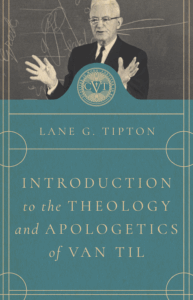
We are pleased to announce the release of an important new book, Introduction to the Theology and Apologetics of Van Til by Lane Tipton. This is the first in a scheduled eight-part series of books on Van Til that correspond to our Fellowship in Reformed Apologetics.
Dr. Tipton has taught eight video courses that work through the entire range of Van Til’s theology and apologetics. Each of the courses is available for free through Reformed Academy and on YouTube. And now you can get the first book in the series.
If you order by November 30, 2025 and you can get the second book in the series, The Trinitarian Theology of Cornelius Van Til for only $4.99!
Participants: Camden Bucey, Lane G. Tipton
]]>They discuss Greenville’s pastoral training mission, the seminary’s remarkable 92% long-term ministry retention rate, and why theological integrity in vows, confessional subscription, and seminary education is essential for the health of Christ’s church. Master insists that doctrine is not a straitjacket—it’s the lifeblood of the church’s joy, sincerity, and freedom in Christ.
Participants: Camden Bucey, Jonathan Master
]]>In this episode, Camden Bucey speaks with Danny Olinger, General Secretary of the OPC Committee on Christian Education, about his new book Christ and His Church-Bride: Meredith G. Kline’s Biblical-Theological Reading of Revelation (Reformed Forum).
Olinger traces how Kline’s covenantal and redemptive-historical reading of Revelation portrays the church’s transformation into the radiant Bride of Christ, moving from imperfection and suffering in the present age to consummate glory in the new creation. The discussion unfolds key themes of recapitulation, the conflict between Babylon and the Bride, and the covenantal drama of creation to consummation.
Through rich historical and exegetical reflection, Olinger shows how Kline weaves together Genesis, Daniel, Zechariah, and Revelation to present a unified vision of redemptive history centered on Christ’s victory and the Spirit’s work in the church. The conversation is both theologically rigorous and pastorally hopeful—reminding listeners that Christ reigns now, the church’s pilgrim identity is secure, and the gospel’s progress continues unthwarted by the powers of this world.
Participants: Camden Bucey, Danny Olinger
]]>