Episodes, articles, books, people, and topics. Search by subject, name, or Bible passage, and hear any moment from more than a thousand episodes exactly where it was said.
Philosophy for TheologiansJune 7, 2010
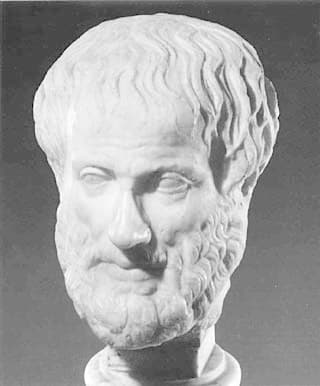
Aristotle, one of philosophy’s greatest minds. Participants: Bob LaRocca, Camden Bucey, Jared Oliphint
Reformed ClassicsJuly 13, 2016
Aristotle and Pelagius. Answer by a distinction. Answer fortified by passages from Augustine, and supported
Philosophy for TheologiansJuly 5, 2011
Aristotle. After laying an introductory foundation, the panel discusses Bavinck’s approach to the subject
June 26, 2018
Aristotle-Christ-Kant Synthesis.” Through the biblical doctrines of divine immutability, covenant, and the image
Christ the CenterJuly 3, 2009
Aristotle’s Treatise on the soul. [St. Paul Minn.]: College of St. Thomas, 1946. _____. Thomas
July 26, 2017
Aristotle, or Locke, or Wittgenstein. And yet the inanity of the previous sentence does
July 30, 2025
Summer 1 By Geerhardus Vos Translated by Daniel Ragusa Though countless signs around me brim that he the land doth greet, how shall I ever find him or where his…
Aristotle-Christ-Kantt synthesis. And certainly Aristotle is a big figure, a big influence upon Thomas. It’s not the only
April 23, 2015
Aristotle as she had need of it and could use it without doing harm
January 29, 2013
Aristotle’s logic to be identical to God’s logic, we end up with
August 14, 2017
Aristotle. It is that synthesis which he often dubs “scholastic.” But it must be made
August 7, 2017
Aristotle offer. In effect, Paul asserts on the authority of Christ that no facts
Aristotle. Aristotle isn’t necessarily wrong. I’m simply saying that when Aristotle go in, in the Bible
been impressed with the, you can’t start from ontology. And I want to say says who Aristotle.
Aristotle, right? You know, it’s, you know, a plus B equals C, uh, you don’t have
Aristotle, and so we better just believe that the world was created and set Aristotle aside at that
Aristotle, and the Church was a little bit worried about this, because, of course, Aristotle‘s God was very
Aristotle, because things could have been very different if Aristotle were translated by different people at different points
Aristotle, and it turns out that a lot of what he says about salvation is kind of a supplement
Aristotle and his metaphysics and finding that all the way into Thomas. So the Aristotle end of the Aristotle
would all question, but so would Aristotle, the use of Aristotle‘s substance-accidents distinction with regard to transubstantiation
example and we would say a bad usage of Aristotle but one that proves the point, right, that Aristotle
kind of like how Aristotle was to Thomas. You couldn’t understand Aristotle except through a myriad of interpreters.
Aristotle. He’s saying, what he’s saying is, Plato had a view. Aristotle, his student, couldn’t live
Aristotle saw that. So what did Aristotle do? He wanted to bring then the forms down into the things
Aristotle. What he’s actually doing is saying what Plato was – and then why Aristotle would reject that
Aristotle. But before we skip over those, could you maybe just touch on a little bit of that
Aristotle. And Aristotle, by the way, is not in disagreement with Neoplatonism. In many instances, he is absorbed
Aristotle discovered, when are they translated, by what route do they come to Western Christendom. Aristotle, in many
Aristotle? Or is that a complex series of sources? Or is it from a defective Christian theology that
Aristotle to the West in Latin translations. And so what’s happening for Thomas that might not have
Aristotle be of interest? And basically that’s why, because Aristotle was made in God’s image, lived
Aristotle poses some very good questions to the mind of Thomas Aquinas. Not where he takes Aristotle and, as it were
sentence? And when he talks about the Aristotle Christ or the Kant Christ or the Aristotle Kant Christ,
Aristotle-Christ-Kant synthesis. Well, what is Van Til talking about? Aristotle is, in one way, representative of Thomism
Aristotle defining the terms of thought, you will have Cicero defining natural law, you’ll have Lucretius and Epicurus
least according to the histories that I’ve read, was trained by Aristotle. He was tutored by Aristotle.